
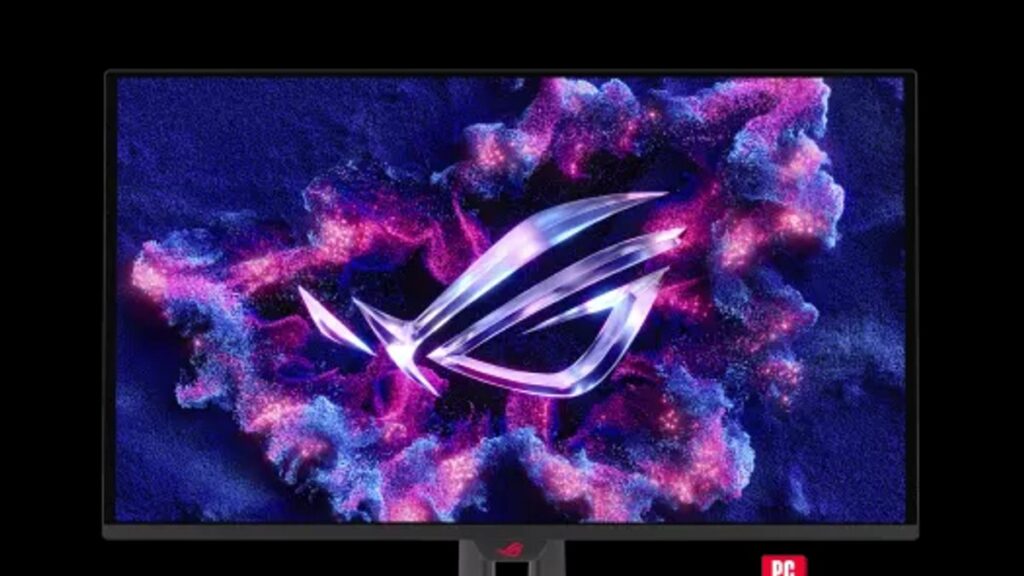
[amazon_rapid query=”ASUS ROG Swift OLED PG27UCDM” brand=”ASUS” layout=”magazine” cols=”3″ country=”US” lang=”en_US” max_pages=”1″ per_page=”8″ sort_by=”RELEVANCE” show_variants=”0″]
Technical specifications overview
| Specification | Details |
|---|---|
| Panel Type | OLED |
| Screen Size | 27 inches |
| Resolution | 4K UHD (3840 x 2160) |
| Refresh Rate | 240Hz |
| Response Time | 0.03ms (GTG) |
| Color Gamut | 99% DCI-P3, 135% sRGB |
| HDR Support | HDR10, Dolby Vision |
| Connectivity | DisplayPort 1.4, HDMI 2.1 x2, USB-C with 90W PD |
| Stand Features | Height, tilt, swivel, pivot adjustments |
Gaming performance metrics
Display quality assessment
• **Color accuracy**: Delta E < 1 for professional-grade precision • **Brightness levels**: 450 nits peak, 150 nits typical • **Contrast ratio**: Infinite (true blacks) • **Viewing angles**: 178° horizontal and vertical • **Screen uniformity**: Excellent across entire panel
Gaming-specific features
| Feature | Performance Rating | Impact on Gaming |
|---|---|---|
| Input Lag | Exceptional (< 1ms) | Ultra-responsive controls |
| Motion Clarity | Outstanding | Sharp fast-moving objects |
| Variable Refresh Rate | G-SYNC Compatible | Eliminates screen tearing |
| Low Blue Light | ASUS Eye Care | Reduced eye strain |
Competitive analysis framework
Price positioning comparison
| Monitor Model | Price Range | Key Advantage | Target User |
|—————|————-|—————|————-|
| ASUS PG27UCDM | Premium ($$$) | Complete feature set | Enthusiasts |
| LG 27GP950 | Mid-range ($$) | Value proposition | Mainstream |
| Samsung Odyssey G7 | Budget ($) | Entry-level OLED | Casual gamers |
Feature differentiation matrix
**Premium tier advantages:**
• Advanced cooling system for OLED longevity
• ROG-exclusive gaming modes and presets
• Premium build materials and design aesthetics
• Extended warranty coverage
**Comparable alternatives offer:**
• Similar refresh rates and response times
• Equivalent color accuracy and HDR support
• Standard connectivity options
• Basic ergonomic adjustments
Use case scenarios
Professional esports applications
✓ **Competitive advantages:**
– Ultra-low input lag for precise reactions
– 240Hz refresh rate for smooth gameplay
– Customizable gaming profiles
– Tournament-approved specifications
Content creation workflows
✓ **Creative professional benefits:**
– Wide color gamut coverage
– Hardware calibration support
– Multiple color space presets
– USB-C connectivity with power delivery
Entertainment consumption
✓ **Media viewing experience:**
– HDR10 and Dolby Vision compatibility
– Cinema-quality color reproduction
– Ambient lighting adaptation
– Multi-device connectivity options
Investment considerations
Cost-benefit analysis
**Premium pricing justification:**
• Advanced OLED panel technology
• Comprehensive feature implementation
• Superior build quality and reliability
• Brand reputation and support
**Budget-conscious alternatives:**
• LED-backlit monitors with similar specs
• Previous generation OLED models
• Smaller screen sizes with identical features
• Refurbished premium options
Long-term value assessment
| Factor | Score (1-10) | Reasoning |
|——–|————–|———-|
| Future-proofing | 9 | Latest connectivity standards |
| Durability | 8 | OLED burn-in mitigation |
| Upgrade necessity | 6 | Technology evolution pace |
| Resale value | 7 | Premium brand retention |
Setup and optimization guide
Initial configuration steps
1. **Hardware installation**
– Secure monitor stand assembly
– Cable management routing
– Power connection verification
2. **Software setup process**
– Driver installation and updates
– OSD menu customization
– Gaming profile creation
3. **Calibration procedures**
– Color space selection
– Brightness optimization
– Contrast adjustment
Performance optimization tips
• Enable G-SYNC for tear-free gaming
• Configure refresh rate matching
• Adjust HDR settings per content type
• Implement OLED care routines
• Monitor temperature management